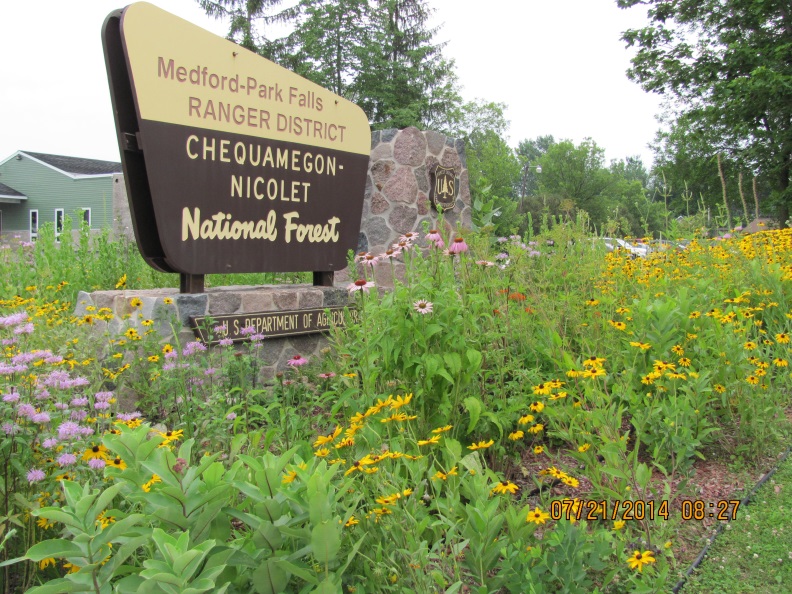
Begin with the place, not the plant list
Choosing native plants starts with a more useful question than what is native somewhere in the United States. You need plants whose regional origin and growing requirements fit the particular patch of ground you want to plant.
A dry strip beside a driveway, a shaded bed under trees, and a moist low area can occupy one property while offering very different conditions. Give each place its own short description before you start collecting appealing plant names.
Your goal is a planting that belongs in your local setting and works in daily life. That means considering mature size, access, establishment care, and the way a plant spreads as well as the color of its flowers.
Use local primary resources for the actual shortlist. A national article can help you ask the right questions, but it cannot turn a Maryland plant list into a reliable prescription for every American backyard.
Describe the site in ordinary observations
Record the sunlight the area receives during the growing season and note any major seasonal change. A bed can look sunny before nearby trees leaf out and become shaded during the months when you expect a flowering plant to perform.
Describe moisture through several weather conditions instead of choosing a label from one afternoon. Note whether the soil stays moist, dries quickly, becomes briefly puddled, or receives runoff from a roof or paved area.
Measure the space that remains after you allow for paths, doors, windows, equipment, and existing plants. Include overhead room and mature width, because a plant can fit the soil surface while becoming awkward against a wall or under a window.
Write down uncertainties instead of inventing precision. You can ask an Extension adviser to help interpret a moisture pattern or soil test, and that is more useful than selecting a plant on the basis of a confident but inaccurate site description.
Narrow the geographic meaning of native
Look for a state Extension service, state native-plant society, botanical institution, or other regionally credible resource. Check how it defines its geographic area, since a state boundary may contain several distinct habitats and growing conditions.
The University of Maryland's Native Plant Finder lets readers select a regional setting and filter by habitat and plant traits. Its Maryland focus illustrates why local selection matters, while readers elsewhere should use an equivalent resource for their own region.
Keep the scientific name with each candidate, together with the source you consulted and the specific area of your yard where you expect it to grow. Common names can refer to different plants, and a precise name makes it easier to compare the nursery label with the species described in your research.
If a source and a nursery disagree about native range, pause that purchase and investigate. A label that says native on a national retail shelf may describe a broader area than the local habitat you are trying to support.
Filter for conditions before appearance
Begin by removing plants that do not fit the available light, moisture, and space. This produces a smaller list, but it prevents an attractive flower photograph from becoming an excuse to ignore the site requirements printed underneath it.
Then compare form and seasonal appearance among the remaining candidates. A plant can be locally native and still be too tall for a path edge, too wide beside a gate, or too visually loose for the particular garden you want.
Look for photographs of mature plants in landscapes rather than only close-ups of individual blooms. You want to understand the entire plant, including its stems, foliage, dormant appearance, and relationship to neighboring plants.
Treat height and spread as planning information rather than exact promises. Conditions vary, so leave practical room for movement and maintenance instead of drawing a mature plant precisely against every available boundary.
Ask what the plant does after it establishes
Investigate whether a candidate clumps, spreads by underground growth, self-seeds, or needs regular division. Those habits can be useful in the right place and frustrating beside a narrow walk or in a tiny mixed bed.
Ask how you would manage the plant if it extends beyond the intended area. If the answer requires a job you already know you will not do, choose a different species or a different location before buying.
Consider the surrounding property too. You may welcome naturalizing growth in a broad border while needing a more contained arrangement next to a neighbor's carefully maintained lawn or a shared access route.
Avoid treating the native label as a guarantee of low maintenance. A suitable plant may need less intervention once established, but establishment, weeding, observation, and occasional management still belong in your plan.

Build a small plant community with a clear edge
Choose a few compatible candidates and repeat them deliberately rather than buying one of everything you like. Repetition makes it easier to understand their growth and creates a more coherent planting while the plants are still small.
Place the tallest or broadest forms where their mature size will not block access or hide a step. Keep the working edge easy to see and maintain, especially where people regularly walk close to the bed.
An original starter exercise is to sketch a small bed with one taller background group, a repeated middle layer, and a lower path edge. These are design roles rather than fixed species recommendations, so fill them only with locally suitable candidates.
Compare flowering periods and dormant structure when you choose the final mix. A planting can offer interest beyond its biggest bloom week if you consider foliage, seed heads, and the overall shape through the seasons.
Buy the exact plants you researched
Take your scientific-name list and site notes to a nursery, then compare the labels carefully. Ask whether the plant is the species, a named cultivar, or a different selection with characteristics that may differ from your research.
Do not assume that every cultivar has the same size, flower form, or wildlife relationships as the species. If those traits are central to your purpose, investigate that exact selection rather than relying only on the shared species name.
Ask about propagation and source information where relevant, and avoid removing plants from natural areas as a shortcut. A nursery purchase with a clear identity is easier to research and track than an unidentified plant collected from a place you do not manage.
If the exact candidate is unavailable, keep its intended role and site requirements on the list. You can find another suitable option later without buying a superficially similar plant that reintroduces the same light or spacing problem you already eliminated.
Plan the first season before expecting independence
Check planting guidance for the actual species and your region, including suitable timing and establishment care. Make sure you can reach the new plants with water and inspect them without trampling the bed.
Label the planting and keep a simple map even if the names feel obvious on installation day. Young growth, winter dormancy, and volunteer seedlings can make identification harder later, especially when you are weeding a new garden.
Photograph the same area periodically and note which plants thrive, struggle, or spread farther than expected. Use those observations to adjust the next planting rather than assuming that a whole category of native plants does or does not work in your yard.
You have a useful shortlist when every plant has a local identity, a suitable place, and a care plan you can manage. The flowers are still part of the pleasure, but the decisions underneath them give the planting a much better chance of lasting.
Sources & further reading
Exact documentation checked October 15, 2026. Original examples and illustrations; no hands-on product testing or professional certification claimed.
- Maryland Native Plant FinderNative selection can filter local ecoregion, habitat, light, moisture, soil, mature height, and plant type; this particular tool is Maryland-specific.
- Native Plants for the Home LandscapeChoose credible regional native-plant resources and investigate exact species/cultivar identity and site fit rather than universalizing a state list.
.jpg)