Watch what the water actually does
A wet patch is a starting observation, not a diagnosis. Before you buy gravel, install a drain, or replace the lawn, find out where the water comes from, how long it stays, and what else is happening around it.
Take dated photographs from the same position before rain, shortly afterward, and again as the yard dries. Write down whether the ground is merely soft, visibly puddled, or carrying moving water, because those conditions suggest different questions.
Stay out of floodwater and avoid damaged electrical equipment, unstable slopes, and fast-moving runoff. If water enters the house, threatens a structure, or appears connected to a utility leak, get suitable help promptly rather than conducting a prolonged backyard experiment.
For an ordinary recurring puddle, your first useful tool is an observation log. It can make a later conversation with an Extension adviser, drainage contractor, or local stormwater office much more specific than saying the yard always looks soggy.
Trace the source without changing its route
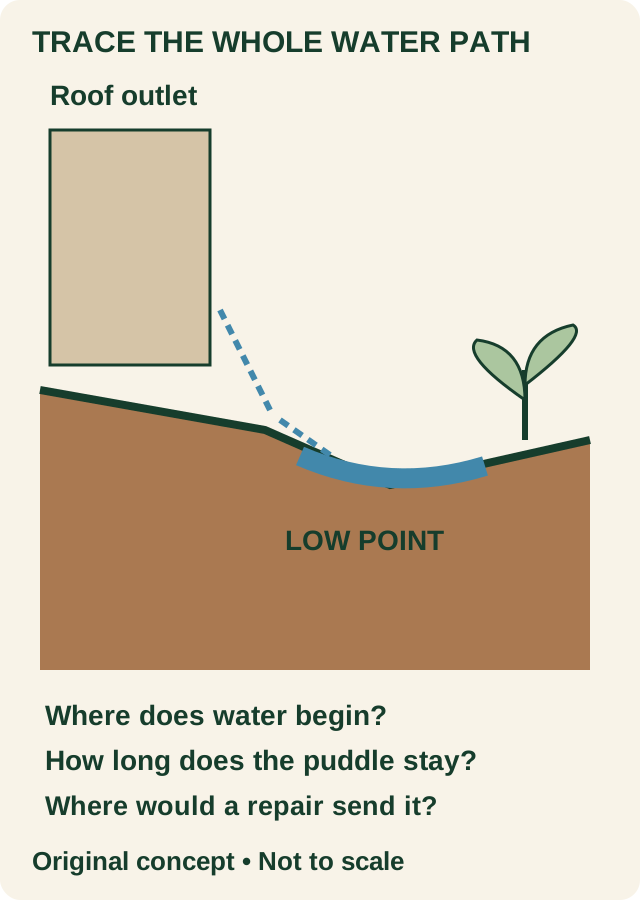
Look uphill from the wet area and note roof outlets, paved surfaces, slopes, irrigation, and neighboring land. You are identifying possible contributions, not deciding that the most visible pipe must be responsible.
Record whether the patch appears only after rain or also during dry weather. A spot that stays wet while the surrounding yard dries deserves investigation of irrigation and water-supply problems as well as soil conditions.
If you operate irrigation, compare the wet area with your watering records and inspect visible components for leaks. Shut off a clearly leaking garden-hose connection and arrange repair, but do not open buried utility equipment or assume you can safely fix an unidentified line.
Avoid redirecting water toward a neighbor, sidewalk, or street as a quick test. The destination matters as much as the route, and drainage changes can involve local requirements or easements that an improvised trench does not address.
Compare several rainfall events
One extraordinary storm may overwhelm a site that behaves differently during ordinary rain. Note the approximate rainfall, the recent weather, and whether the soil was already wet, rather than assigning every puddle the same meaning.
Choose a simple interval for follow-up photographs that you can repeat, such as the following morning and later that day. These are observation times for comparison, not a universal pass-or-fail drainage standard.
Watch the edges as well as the deepest point. If the wet area shrinks steadily, that tells a different story from a puddle that remains unchanged or expands even after the rain has stopped.
Record effects on actual use: a muddy gate route, a damp bed, or standing water beside a foundation. A useful repair prioritizes the consequence and cause together, rather than treating every patch of moist ground as equally urgent.
Separate surface flow from soil behavior
Water can arrive faster than the ground absorbs it, become trapped by a low spot, or persist because conditions below the surface limit drainage. More than one mechanism can operate in the same small area.
The University of Maryland explains that compacted soil has less space between particles, limiting roots, oxygen, and other soil functions. That makes a frequently walked shortcut worth noting, but it does not prove compaction is the only cause of your particular puddle.
Look for clues such as wheel ruts, a heavily used gate, a depression beside a new path, or a visible barrier across the previous flow route. Photograph them before altering anything so you can explain the site's history later.
Do not turn an informal hole test into a complete engineering diagnosis. A small test samples one location and set of conditions, while a practical drainage design needs to account for incoming water, buried conditions, elevations, and a lawful outlet.
Keep soil improvement in its proper role
Improving a garden bed may help its structure, but adding compost does not automatically solve water arriving from an entire roof or a blocked drainage route. First decide whether you are addressing soil quality or the movement of water across the site.
Maryland's soil-health guidance recommends organic matter, plant cover, and limiting disturbance as parts of soil care. Those practices support soil function, but they are not permission to raise grades against buildings or bury established roots.
Avoid repeated traffic when the ground is wet, especially if you can move a temporary route onto sound ground. If the only way to use the yard crosses the same soft patch, include that movement problem in the plan rather than expecting plants alone to solve it.
Before importing topsoil, ask where the added material will send the next rainfall. Raising one patch can move the low point somewhere less convenient, and a shallow cosmetic layer can hide the symptom without changing its source.
Decide whether planting is part of the answer
A naturally moist planting area may offer opportunities if it is safely located and its water behavior is understood. You can investigate locally appropriate plants that tolerate those conditions instead of forcing a dry-site planting into the same ground.
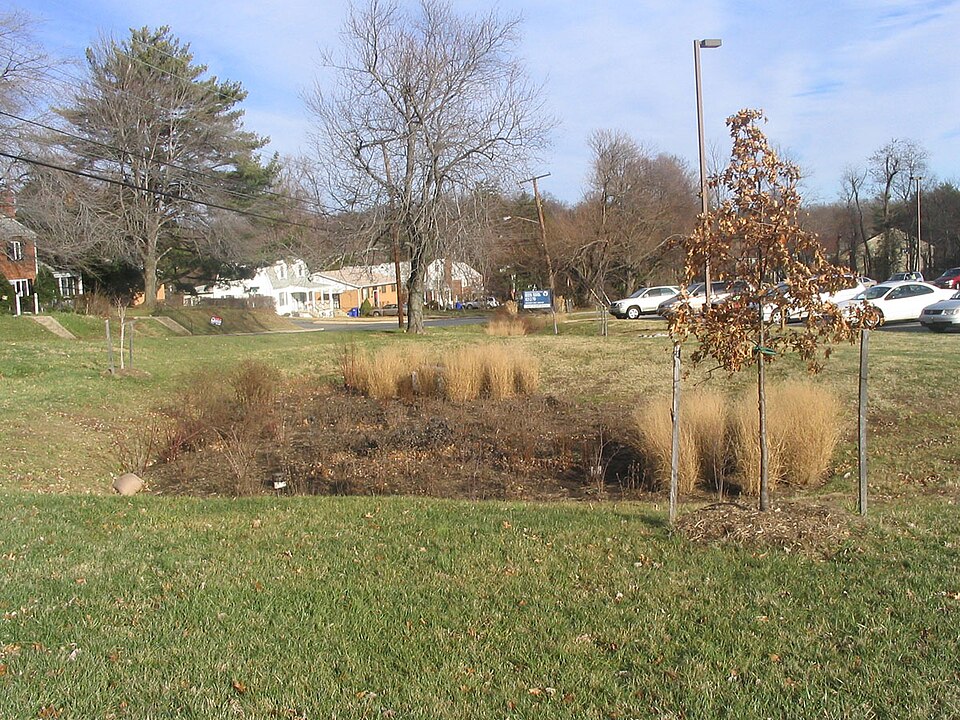
That does not make every puddle a ready-made rain garden. A rain garden is a planned stormwater feature whose location, sizing, soil, overflow, and relationship to buildings need assessment, so treat it as a design option rather than a label for an unexplained depression.
Mark the wet area's seasonal variation before selecting plants. A place that is saturated briefly in spring and dry in midsummer asks for a different selection than soil that remains consistently moist.
If you want to investigate a rain garden, take your observations to the local stormwater program or Extension office. Ask whether the location is appropriate before you shop from an attractive national plant list.
Know when the project needs another set of eyes
Get help when the proposed fix involves foundations, retaining walls, steep slopes, significant excavation, shared drainage, or an uncertain outlet. Those are site-design questions with consequences beyond whether the lawn looks dry.
Bring a sketch showing the house, paved surfaces, roof outlets, visible flow direction, and persistent wet areas. Add dated photographs and notes about when the issue began, especially if recent construction or landscaping changed the pattern.
Ask the person assessing the site to explain the suspected source, the proposed path, the final destination, and how the solution will be maintained. A drain that cannot be inspected or cleaned may exchange a visible nuisance for a hidden one.
For buried work, follow the local utility-location process and ask about privately installed lines. A small project is still digging, and the fact that you can carry the shovel yourself does not identify what lies beneath the surface.
Check the result against the original problem
After an appropriate repair, return to the same observation points during comparable weather. Check whether the original puddle has improved and whether water now creates a problem at a gate, bed, neighboring boundary, or another part of the house.
Keep maintenance instructions with your yard records if the solution includes an inlet, pipe, swale, or other feature. Clear access and routine inspection are part of the design, not optional extras once the visible puddle disappears.
If results differ from expectations, document them before adding another layer of fixes. A clear sequence of observations and changes gives the next assessment a better starting point than a yard full of undocumented trenches and fill.
Your aim is a yard that handles water appropriately for its setting and intended use. That might mean a repaired leak, a redesigned route, a better planting choice, or professional drainage work, but the evidence should decide which one belongs on your list.
Sources & further reading
Exact documentation checked October 15, 2026. Original examples and illustrations; no hands-on product testing or professional certification claimed.
- Soil Health, Drainage, and Improving SoilCompaction changes pore space and root/oxygen conditions; healthy soil management includes cover, organic matter, and limiting disturbance.
- Soil BasicsSoil supplies air and water; compaction and poor drainage are different soil constraints requiring observation.