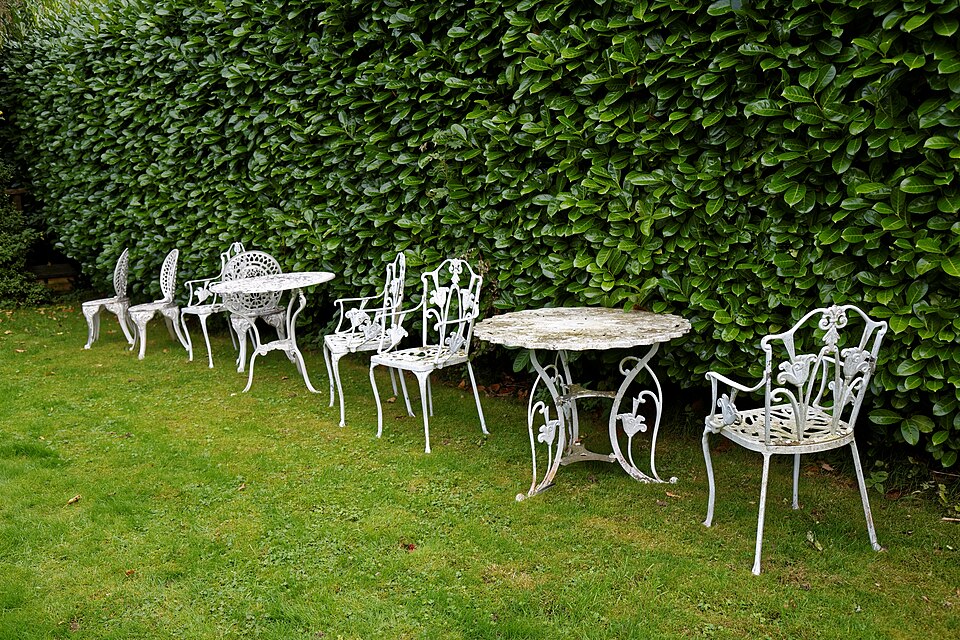
Identify the part you are about to clean
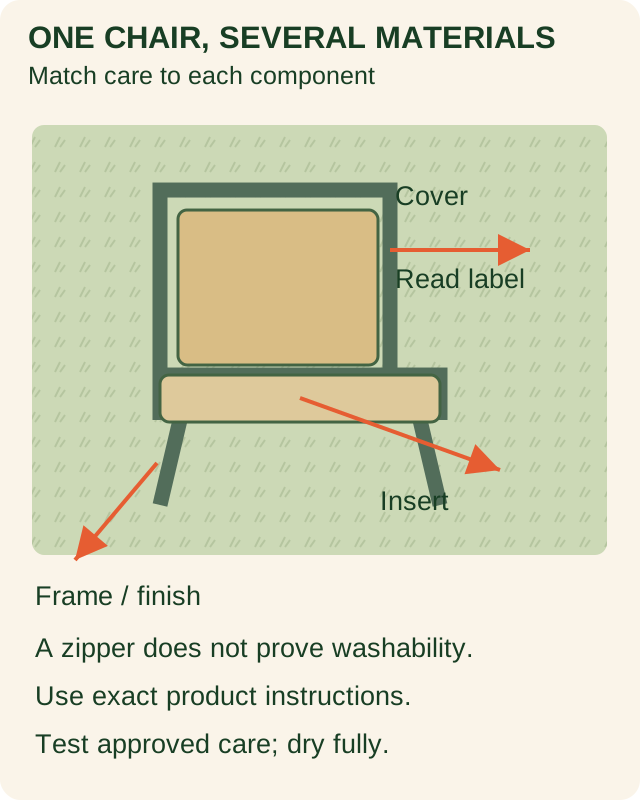
An outdoor chair can contain several materials with several care requirements. Before you reach for a cleaner, separate the frame, woven surface, cushion cover, cushion filling, hardware, and any protective finish in your mind.
The visible fabric is only one part of that assembly. A cover that tolerates washing does not establish that the foam, liner, zipper, and attached trim should all go through the same process.
Take a photograph of the furniture and every readable label. You can enlarge small print later without repeatedly turning over a heavy chair or holding a loose cushion in an awkward position.
Look for the maker, collection, model, fabric identification, and care symbols or written instructions. Record the exact wording rather than reducing it to a memory such as outdoor fabric or washable.
Your goal is to connect each surface to its own care directions. That is more useful than choosing the strongest product in the garage and hoping the word outdoor means everything is equally durable.
Find the instructions that match your item
Check the manufacturer's current product or support information using the model you recorded. A general furniture article can provide context, but the instructions for your particular construction deserve priority.
If the label names a separate fabric maker, read that guidance alongside the furniture maker's instructions. A branded textile can be used in products whose removable covers and internal components differ.
Sunbrella's upholstery guidance describes cleaning methods for its own fabrics, including brushing loose dirt and using appropriate soap-and-water care. It does not establish a universal recipe for every cushion sold for outdoor use.
Frontgate's outdoor furniture care guidance similarly separates materials and care tasks. Use the distinction to ask better questions rather than assuming a cleaning method for teak also suits a coated metal frame.
If you cannot identify an older item, contact the seller or manufacturer with clear photographs. An unresolved label is a reason to proceed cautiously, not permission to invent a care specification.
Translate the label into a simple work plan
Write a short list for each part: what you may remove, which cleaner is allowed, how to rinse, and how to dry. Keep the original instructions available beside that list in case a detail matters later.
Notice whether the guidance calls for spot cleaning, complete surface cleaning, hand washing, or a machine process. Those instructions describe different tasks even when they all sound like ordinary washing.
Check for temperature, agitation, drying, and finish restrictions. A removable zipper tells you how the item opens; it does not by itself tell you that machine washing is approved.
Separate routine dirt from a specific spill or stain. You may need a different approved response for a fresh food spill than for a season of dust across the whole cushion.
Before mixing or applying anything, read the cleaning product label too. Furniture instructions and cleaner directions both matter, including compatibility, ventilation, protective equipment, and safe storage.
Prepare a place where rinsing is manageable
Choose a working area where you can support the furniture securely and handle wash water appropriately. Keep electrical equipment, food preparation, and children's activities away from the cleaning setup.
Remove loose dirt using the method permitted for the material before wet cleaning. Otherwise you may spread gritty debris across a finish or turn dry dust into a larger muddy mark.
Lay out soft tools that suit the instructions rather than starting with an aggressive brush. A tool that seems efficient on a rough garden pot may scratch a coating or damage a delicate weave.
Plan the drying location before you begin. If the forecast is unsettled and you have no suitable sheltered space, choose another day instead of leaving wet cushions stacked in a corner.
Keep the parts organized as you remove them. A quick phone photograph can show which cushion belongs to which seat and how a removable panel was originally positioned.
Test the approved approach in a discreet place
Follow any spot-test directions from the furniture or cleaner manufacturer. Choose an inconspicuous area and allow the result to dry before deciding whether the surface has changed.
Look for color transfer, whitening, altered texture, loosened finish, or other unexpected effects. A wet patch can conceal a change that becomes obvious only after drying.
Use the specified concentration and application method. Making a solution stronger because the stain looks stubborn can damage the material without improving your understanding of the problem.
Never mix cleaning products in search of a more powerful result. If the approved method is not working, stop and ask for guidance about the exact material and stain.
An unsuccessful test gives you valuable information before the whole visible surface is affected. Treat that pause as part of careful cleaning rather than a reason to scrub harder.
Clean fabric as fabric, not as a mystery cushion
For Sunbrella upholstery, the maker describes brushing away loose dirt, blotting spills, and appropriate mild-soap cleaning with thorough rinsing. Check the current directions for the particular stain and fabric rather than relying on a remembered recipe.
Its guidance also discusses cleaning from seam to seam where needed to avoid a visible ring. That is a fabric-specific instruction you should confirm for your item before expanding a small wet patch.
Work within the furniture maker's rules for removing covers. If a cover should remain on its insert, do not force it off simply because another cushion in the household has a washable shell.
Pay attention to seams, piping, fasteners, and attached trim as you work. Those details may dry differently or react differently from the broad central panel.
Let the approved drying process finish fully before you judge the result. A cushion that feels dry on its upper surface may still hold moisture underneath or within its filling.
Give frames and finishes their own treatment
Identify whether your frame is bare wood, finished wood, coated metal, plastic, woven resin, or another material. Appearance alone can mislead you, especially when a coating imitates a different surface.
Use the frame maker's instructions for cleaning and any maintenance coating. Do not add oil, polish, sealant, or abrasive treatment because a similar-looking chair in an online photograph received it.
Check hardware and joints while the furniture is accessible. Cleaning can reveal a loose component or damaged finish, but it does not automatically qualify you to repair structural damage.
Avoid directing high-pressure water into joints or upholstery unless the maker specifically allows that method. A quick visible rinse can leave hidden water where you cannot easily inspect or dry it.
If you find cracking, unstable legs, or damaged load-bearing parts, pause use and seek the appropriate repair guidance. A freshly cleaned surface does not establish that the chair is structurally sound.
Save the information for next time
Create a small care record with label photographs, the matching instruction link, and the method you actually used. Add the date and any result you would want to remember before the next cleaning session.
Store removable labels or paperwork with the record rather than relying on a fading tag beneath the frame. Include the product model so you can find replacement parts or updated guidance later.
Before covering or storing the furniture, check every part for remaining moisture. Follow the instructions for covers and ventilation instead of treating a waterproof-looking cover as a substitute for drying.
Review your routine after a few uses. Brushing away ordinary debris or dealing promptly with a spill may reduce the need for another large cleaning session.
The best result is furniture you can care for predictably. Once you know which instructions belong to each component, cleaning becomes a sequence of specific decisions instead of a gamble with an unidentified material.
Sources & further reading
Exact documentation checked October 15, 2026. Original examples and illustrations; no hands-on product testing or professional certification claimed.
- How to Clean Sunbrella Upholstery Fabrics — SunbrellaFabric-specific gentle cleaning/rinsing/air-drying example, not universal for every fabric
- Outdoor furniture cleaning — FrontgateIdentify furniture material and protect finish; start gently; dry thoroughly