Screen the view that bothers you
Before you shop for a fast-growing hedge, sit in the place where you want more privacy. The view you need to interrupt from a dining chair may be much smaller than the view you notice while standing at the back fence.
Take a photograph at seated eye level and another from the house window, then label the position and direction so you can repeat the view later. Mark the actual distraction, whether that is a neighbor's patio, parked vehicles, or a busy sidewalk, rather than assuming the entire boundary needs a wall of plants.
You may discover that a short screen close to your chair solves the problem better than a tall hedge far away. This is a sight-line planning exercise, so test it with a movable panel or tall cardboard before committing to a permanent structure.
Be realistic about what planting can do. A leafy screen can filter a view, but it does not promise silence, year-round opacity, a legal boundary, or complete privacy from an elevated window.
Draw the width before the height
Plant labels make height easy to notice, but mature width often decides whether a hedge belongs in your yard. Draw the expected spread of each candidate as a full-sized circle on your plan before counting how many plants you can buy.
If the available strip is six feet wide, a plant that commonly spreads twelve feet is not a six-foot plant because its nursery pot is small. Maintaining an unsuitable plant in a narrow strip may create a permanent pruning job rather than a low-effort screen.
Include the space you need to work beside the planting. You should be able to inspect the fence, reach gates, manage irrigation, and remove debris without squeezing through branches or using your neighbor's property as an access path.
Leave existing utilities and service areas visible on the sketch. A beautifully spaced screen still fails the practical test if it blocks a meter, crowds electrical equipment, or makes an important access route unusable.
Choose a mix that belongs in your conditions
The University of Maryland recommends mixed privacy screens because one shared pest, disease, or weather problem can leave a large gap in a single-species row. A varied screen spreads that risk, although it cannot make individual plants immune to trouble.
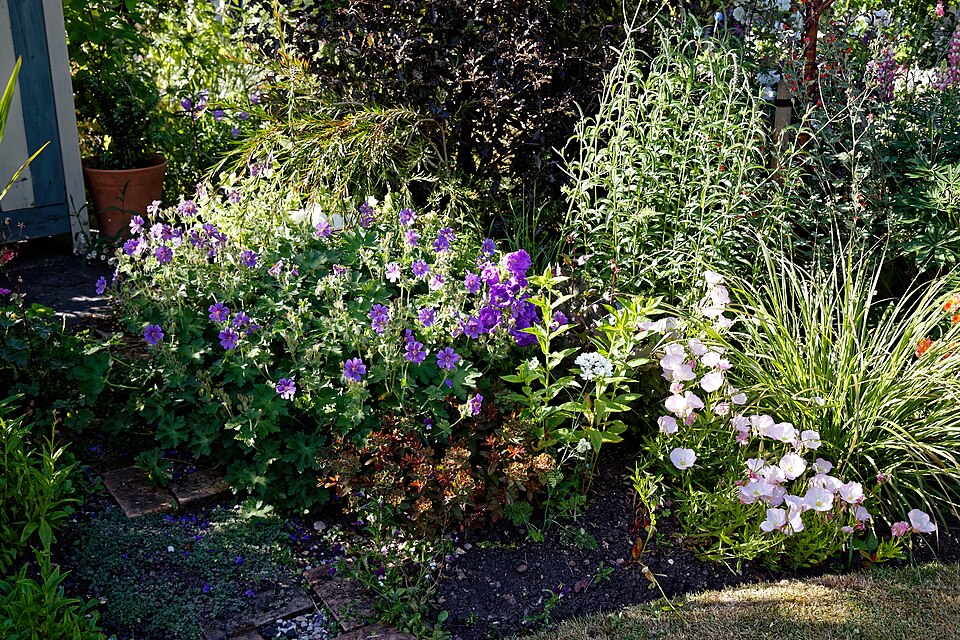
Variation can be modest and orderly. You might repeat a few compatible plants in small groups, with taller forms behind lower ones, rather than assembling a different species for every space along the fence.
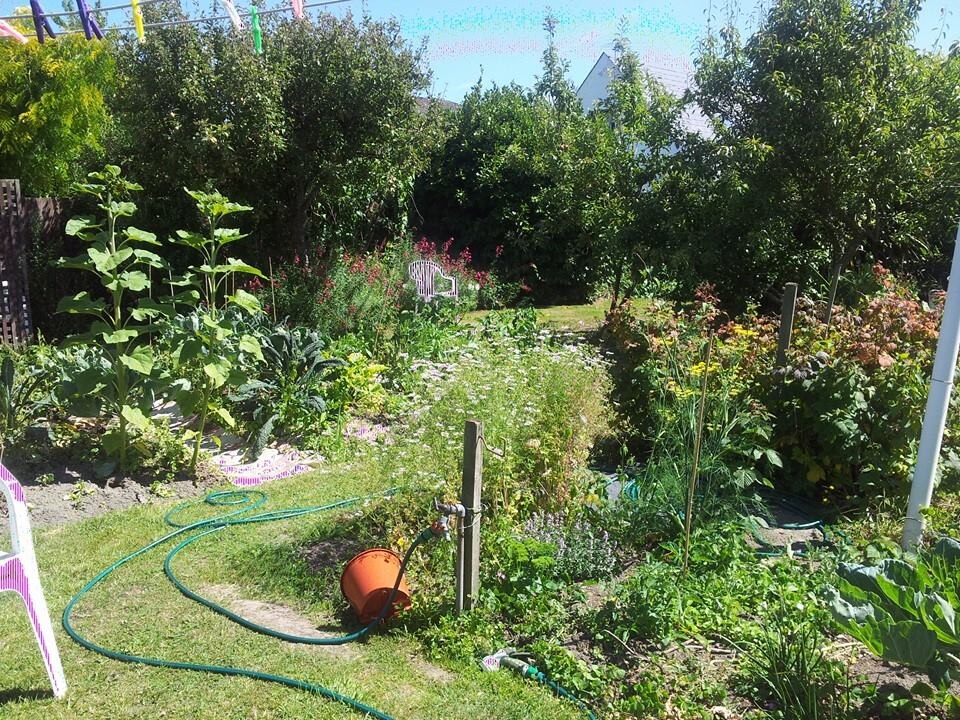
Start with your actual light, moisture, soil, and room, then investigate regionally appropriate candidates. A plant recommended for Maryland is a research lead for Maryland readers, not a universal recommendation for a yard in Arizona or coastal California.
Check local invasive-plant information before buying, particularly when a plant is promoted mainly for rapid growth. The same spreading habit that seems convenient for screening can create a difficult problem beyond the area you intended to fill.
Decide how much winter cover you need
Stand at the privacy problem during the season when you use the space most. If you want cover for summer dinners, deciduous shrubs may contribute effectively even though their branches become more transparent in winter.
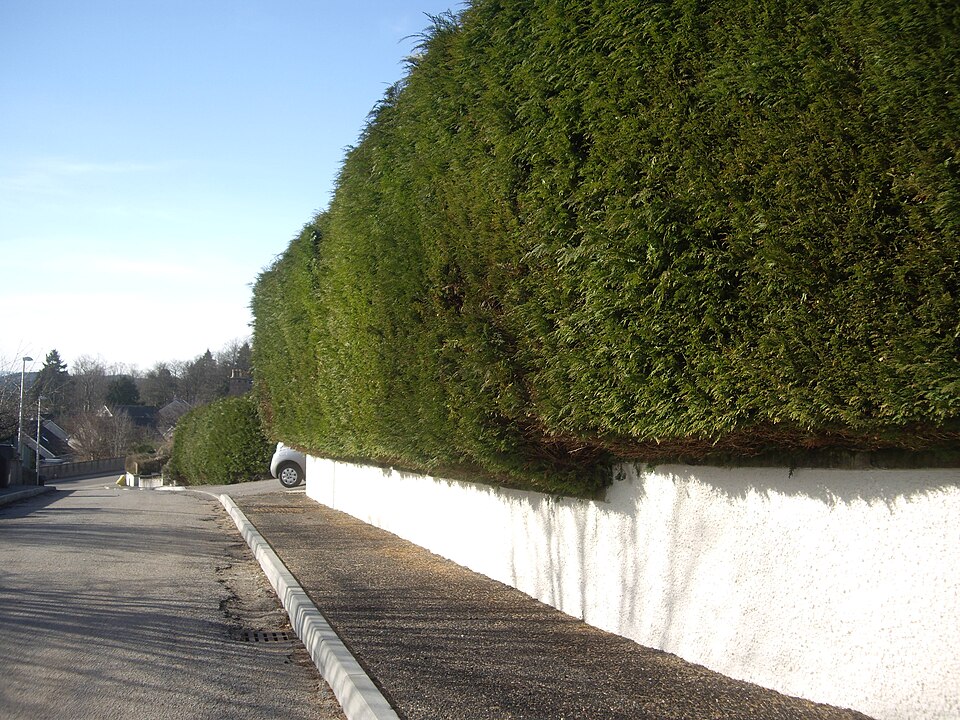
If your concern is a year-round view from a living-room window, evaluate evergreen structure more carefully. Look at mature plants locally when possible, since density, lower branching, and winter appearance may differ from a tightly framed nursery photograph.
Do not let the word evergreen replace a full site check. An evergreen suited to dry ground may struggle in a wet pocket, while one adapted to cool conditions may be a poor choice beside a hot reflective wall.
Think about light you would lose as well as views you would hide. A dense screen can change what you see from indoors, so an appealingly private patio may also become less open or darker than you wanted.
Check the rule before using a fence or trellis
A temporary mockup can help you choose a height, but it does not tell you what your municipality or homeowners association permits. Verify height limits, setbacks, corner visibility, permits, and any applicable community rules before ordering a structure.
Use a survey or qualified boundary information where ownership matters. A hedge or fence installed by a previous owner is not enough evidence to establish where a new post or planting belongs.
Before digging for shrubs or posts, follow the local utility-location process and determine whether private lines need separate locating. Include irrigation, lighting, and other homeowner-installed systems in your questions rather than assuming a public locate identifies everything.
If a vine-covered trellis seems like the narrow-space answer, investigate the vine's mature weight, spread, maintenance, and attachment habit. It still needs a suitable support and a way for you to manage growth without creating another access problem.

Plan for the years before the plants meet
New shrubs will usually leave open space, and that can tempt you to place them too closely. Resist treating the first summer's gaps as proof that the mature spacing is wrong.
Draw two versions of the screen: planting day and the expected mature arrangement. If the early version does not provide enough privacy, use a reversible temporary measure where permitted rather than permanently crowding the root zones.
An example might be a movable planter positioned near your chair while a mixed border develops farther away. The planter gives immediate visual interruption, while the border has room to become the longer-term planting you actually intended.
Budget for establishment care as part of the purchase. A line of new shrubs is not a completed screen if you cannot reach it with water or make time to check the root zones during hot or dry periods.
Make the maintenance test honest
Ask how each candidate is normally pruned and what happens if you miss a season. A formal clipped hedge and a loosely layered border can both look deliberate, but they ask for different kinds of work.
Consider where trimmings will go and how you will reach the upper growth. If maintaining the design requires work at a height or in a position you cannot manage safely, choose a different form or include professional care in your budget.
Check how foliage and stems meet walkways after rain or snow. Leave practical space for those changes rather than positioning plants so tightly that one wet branch turns the only route to the shed into an obstacle course.
Expect animal browsing to remain possible even when a plant has a deer-resistance rating. Maryland's guidance stresses that resistance is not a guarantee, so investigate local pressure and suitable protection before relying on a rating alone.
Compare two complete solutions before buying
Make one plan that screens the view near your sitting area and another that plants along the boundary. For each, note mature width, seasonal cover, access, establishment needs, and the rules still to verify.
Then test both ideas from the actual chair with a simple movable mockup. A closer screen may need less height, while a boundary planting may give a broader visual benefit elsewhere in the yard.
Choose the plan that gives you the privacy you need without creating a maintenance debt you already know you dislike. You can still use attractive plants, but their beauty should come with enough space and suitable conditions to last.
Keep your plant list, spacing sketch, and unanswered questions together when you visit a nursery. You will get a more useful conversation by showing the planting strip and its conditions than by asking for the fastest hedge on the property.
Sources & further reading
Exact documentation checked October 15, 2026. Original examples and illustrations; no hands-on product testing or professional certification claimed.
- Plants for Mixed Privacy ScreensMixed privacy screens reduce shared species-failure risk; research site fit, mature height/width, regional invasive status, deer pressure, access, and establishment.
- Selecting trees and shrubs for windbreaksSelect locally suitable hardy plants, mix deciduous/coniferous species to purpose, and use species-specific spacing rather than nursery-pot size.