Make closing the umbrella the first decision
A patio umbrella is convenient shade, but an open canopy also presents a large surface to moving air. If windy weather is expected, begin by deciding when you will close and secure the umbrella according to its instructions.
Do not treat an inspection as a way to authorize leaving it open through conditions the maker warns against. Even an undamaged umbrella needs to be used within its exact model's requirements.
Treasure Garden's support guidance tells owners to close umbrellas when unattended and take appropriate action in windy conditions. Check the current manual for your own model, because base requirements and operating systems differ.
If the weather is already rough, prioritize keeping people clear. Do not stand underneath an unstable canopy or try to wrestle a lifting umbrella into submission while others remain nearby.
The useful inspection happens ahead of the weather, with time to identify a problem and change your plans. A closed umbrella and an indoor meal can be a perfectly sensible result.
Find the model and its instructions
Look for the manufacturer's label, model number, and purchase information. Photograph them so you can match the umbrella to its actual manual rather than to a similar-looking product online.
Identify whether it is a center-pole or cantilever design and which base or mounting system is specified. A broad offset canopy can place loads on its support differently from an umbrella passing through a table.
Check the manual's instructions for closing, securing, moving, and storage. Follow any sequence involving tilt, rotation, crank, or locking controls instead of improvising the order from appearance alone.
If the base and umbrella came from different sellers, verify their compatibility. A pole that fits into a hole is only one part of the support question.
When the model cannot be identified, ask the seller or manufacturer for help. Avoid borrowing a weight requirement or wind claim from another product simply because its canopy has the same number of ribs.
Look at the ground and the base
With the umbrella safely closed, examine the surface supporting the base. Look for rocking, uneven pavers, soft ground, or a position where the base has gradually shifted toward an edge.
Read the exact base requirements in the manual, including any approved fill, weights, anchoring, or component arrangement. Do not invent a universal number of pounds for every umbrella size and shape.
Inspect the base for cracks, missing parts, loose assemblies, and damaged adjustment pieces. Follow the maker's procedure for checking fasteners, and avoid substituting random hardware without verifying suitability.
Check that the pole is seated and secured as instructed. A loose sleeve or missing knob is an issue to resolve before use, not something a nearby chair can reliably compensate for.
Keep the surrounding floor clear of objects that could trip someone while closing the umbrella. The support arrangement should not force you to step over a hose or balance beside a wet planter.
Inspect the pole and its connections
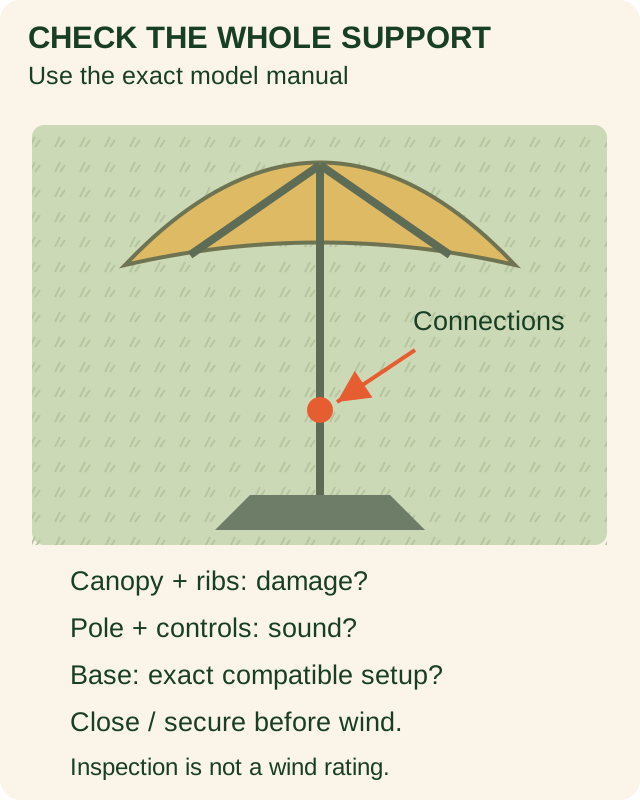
Look along the accessible pole sections for bending, cracks, corrosion, and unusual movement. Compare suspect areas with the manual or manufacturer guidance rather than trying to judge structural strength from a photograph alone.
Check connections between pole sections and any tilt or rotation mechanism. Missing pins, damaged collars, or controls that no longer hold their intended position deserve attention before the canopy is opened again.
Do not force a stiff joint by using the canopy as a lever. That can load the frame in an unintended way while leaving the original mechanical problem unresolved.
If a repair requires disassembly beyond normal owner maintenance, contact the maker or an appropriate service provider. A shade product can look simple while relying on specific components and tensioned mechanisms.
Keep children and bystanders away from the operating area. A moving canopy or shifting pole can affect more space than the base alone suggests.
Read the canopy and ribs as a system
When conditions are calm and the manual permits it, inspect the canopy using the prescribed opening procedure. Stay clear of moving parts and stop if the mechanism binds or the frame behaves unexpectedly.
Look for torn seams, detached attachment points, bent ribs, and components that no longer align normally. Fabric and frame work together, so a loose corner is more than a cosmetic detail to ignore indefinitely.
Check accessible fasteners and connectors without climbing on furniture. If you cannot inspect an area from a stable position, arrange safer access or professional help instead of stretching over the table.
Do not operate the crank repeatedly to overcome a jam. Identify the cause through the manual or support service before extra force turns a small problem into damaged parts.
Record any concern with clear photographs and the model number. That gives the manufacturer a much better starting point than saying that the umbrella feels a little wobbly.
Rehearse the normal closing routine
Close the umbrella in calm conditions using the exact sequence in its manual. Watch whether tilt, rotation, and locking controls return to their intended positions without forcing them.
Use the supplied ties or securing arrangement as directed. An improvised cord wrapped around the wrong component can interfere with the mechanism or fail to restrain the canopy as intended.
Decide who will close the umbrella when you leave the patio. A clear household habit is more reliable than assuming the last person outside will remember an instruction nobody discussed.
Keep the crank or operating control accessible after furniture is arranged. A chair pushed against the pole can make a simple closing task awkward at the very moment you want it done promptly.
If the instructions call for removal or horizontal storage in certain conditions, plan where and how that will happen safely. A storage instruction is only useful when the object has somewhere suitable to go.
Avoid turning weather into a personal test
Use the manufacturer's restrictions and current local conditions when making a decision. Do not invent your own wind rating from an app number, a previous lucky afternoon, or an umbrella that once survived a gust.
Wind at your patio can differ from a reported reading elsewhere. Buildings, corners, and open approaches can change the exposure, and a calm moment does not guarantee the next few minutes will stay calm.
If you notice lifting, unusual movement, or sudden instability, keep people away and follow appropriate safety guidance. Do not recruit guests to hold down a base while continuing to use the shade.
A heavy base is part of a specified support system, not an unlimited guarantee. Adding unrelated weights can also create trip hazards or loads the product was not designed to carry.
Choose another shade or indoor arrangement when the setup cannot be used within its guidance. The purpose of the inspection is to make a sound decision, including a decision to leave the umbrella closed.
Keep a small maintenance record
Save the manual, model photographs, compatible base information, and any support correspondence together. That record makes the next inspection faster and helps you order the right replacement component if needed.
After severe weather, inspect the closed setup again before ordinary use. A shifted base or damaged connection can be easy to miss when you focus only on whether the canopy is still present.
Follow the maker's cleaning, drying, and seasonal storage directions. Do not put away wet fabric or assume a cover eliminates the need to inspect the structure beneath it.
Review the location after you rearrange the patio. A new table, grill, or planter can change access to the controls even when the umbrella itself has not moved.
Your best preparation is a known model, a sound specified support arrangement, and an easy closing routine. That gives you something useful to act on before the forecast becomes the weather at your back door.
Sources & further reading
Exact documentation checked October 15, 2026. Original examples and illustrations; no hands-on product testing or professional certification claimed.
- Customer Support — Treasure GardenIdentify exact model; secure appropriate base; close/store when windy; do not leave open unattended