Draw the route before buying the lights
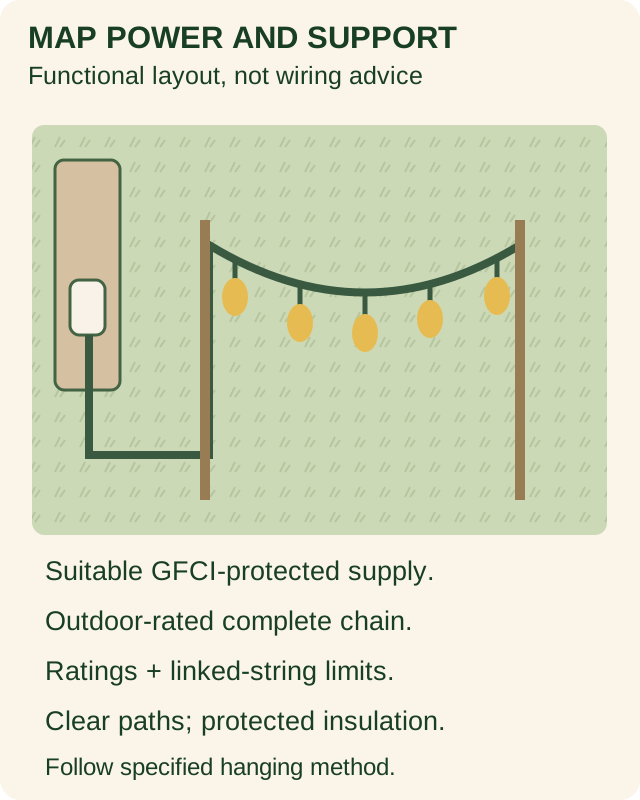
Start with a sketch of the space you want to light, including the outlet, seating, doors, paths, and possible support points. A line drawn across a photograph can reveal problems that a product's attractive patio picture never shows.
Choose the purpose of the lights in plain language. Gentle light above a dining area and useful illumination along steps are different needs, and decorative strings should not automatically carry both jobs.
Measure the intended route without climbing onto unstable furniture or stretching a cord over a walkway. Include the distance from the power source to the first light, because that section can determine the whole arrangement.
Your plan should identify where the equipment belongs and which questions remain unresolved. It is not a wiring design or permission to alter a household circuit.
For outlet installation, damaged wiring, or uncertainty about the electrical supply, involve a qualified electrician. You can still complete the layout and product-information work while that question is resolved.
Identify the actual outdoor power source
Find the outlet you intend to use and check its condition from a safe, dry position. A cracked cover, loose receptacle, scorching, or other damage is a reason to stop and seek appropriate help.
The Electrical Safety Foundation advises using ground-fault circuit-interrupter protection for outdoor electrical equipment. Confirm the suitable arrangement for your supply rather than assuming an outdoor-looking outlet has everything the installation requires.
Do not open electrical boxes or change wiring as part of this planning exercise. If you cannot establish that the outlet and protection are appropriate, have a qualified person inspect them.
Notice whether a door, gate, or moving furniture would interfere with the route from the outlet. A conveniently located receptacle is less useful if its cord must pass through a pinched doorway.
Record the supply question separately from your choice of bulb style. Buying a different-looking string cannot fix an unsuitable or unidentified power arrangement.
Read every rating in the chain
Check that the lights are explicitly rated for their intended outdoor use. Read the actual instructions and markings instead of treating a photograph of a patio as the product's electrical specification.
Do the same for any extension cord, connector arrangement, timer, or other accessory. The complete setup includes more than the string of lights you see overhead.
ESFI recommends matching extension-cord capacity to the electrical load and following product instructions. Find the relevant ratings on your exact equipment and ask the manufacturer or electrician when the information is unclear.
Keep track of the manufacturer's limit on connected strings. Two sets that look identical can have different instructions, so do not transfer a maximum from a different model or an older package.
Avoid building a plan around a sequence of improvised adapters. Each additional component adds another compatibility and placement question you must answer before use.
Separate the span from the power lead
On your sketch, mark the lighted section and the unlighted lead separately. A product with a long total length may still put its first bulb in an awkward place relative to your outlet.
Read the manufacturer's support and hanging instructions for the string. Some arrangements need a separate approved support system, while others have specific attachment points and limits.
Do not ask an electrical cord to serve as an improvised structural cable. The support method should follow the product guidance rather than relying on tension between two convenient trees.
Check clearances around doors, branches, hot equipment, and places where people carry tall objects. Your preferred route needs to work during everyday yard use, not only while everyone is sitting still.
If a support point requires drilling into a building or installing a post, resolve that work appropriately. A decorative lighting project can involve structural or property questions that deserve more than a quick guess.
Plan the connections as carefully as the bulbs
Mark each connection on the layout and check its permitted location in the product instructions. Keep electrical equipment clear of standing water and protect it as required for its intended exposure.
Do not assume that a plastic bag or household tape turns an ordinary connection into an approved outdoor assembly. Use components and protection methods designed and permitted for the equipment.
Look at what happens when it rains, when the lawn is watered, and when someone washes the patio. A connector that seems dry on installation day can sit in a very different environment later.
Keep cords away from sharp edges and places where doors, windows, or furniture can pinch them. ESFI specifically warns against damaging insulation and routing cords where they can be crushed.
Avoid leaving a loose loop across a walkway, even temporarily as part of the finished setup. Change the route or power plan so guests do not need to step around an electrical obstacle.
Check the equipment before hanging it
With everything disconnected, inspect cords, plugs, sockets, and any manufacturer-specified seals or components. Follow the instructions for dealing with missing or damaged parts instead of assuming a small crack is harmless.
Use replacement bulbs or components only as the maker permits. A bulb that fits physically may still be the wrong electrical or enclosure choice for the string.
Lay the equipment out safely and compare it with your measured route. Verify that the product actually provides the lead length, lighted span, and connection arrangement your sketch assumes.
Do not modify the cord or remove a safety feature to make the route work. If the equipment does not suit the plan, change the plan or choose appropriate equipment.
Keep the instructions and identification information after unpacking. You may need them when replacing a bulb, checking a connection limit, or deciding how to store the lights later.
Install only within the equipment's guidance
Use stable access equipment and get suitable help for work above your comfortable reach. A chair on uneven paving is not a sensible way to attach the last support point.
Follow the specified attachment method without staples, nails, or other hardware that could damage insulation. Support the string as instructed and leave the electrical components free from unintended mechanical strain.
Keep the work area clear of children, pets, and bystanders while you handle the equipment. Do not energize a partially arranged setup merely to see whether the layout looks attractive.
Once installation is complete and safe, check the operating routine using the equipment's directions. If anything behaves unexpectedly, disconnect safely and investigate before continuing to use it.
Adjust the lighting purpose if necessary. Decorative ambiance can coexist with separate appropriate lighting for stairs or other hazards without forcing one string to solve every visibility problem.
Make inspection part of using the patio
Look over the setup after storms, maintenance work, and furniture changes. A branch, shifted chair, or moved planter can change a previously clear cord route.
Follow the manufacturer's directions for unattended use, switching off, seasonal removal, and storage. Do not leave damaged or unsuitable equipment connected because taking it down feels inconvenient.
Keep a record of the exact string model and any compatible accessories. That makes it easier to avoid mixing replacement components that merely look similar.
If your preferred arrangement repeatedly needs extra cords or creates awkward access, revisit the power-source plan with an electrician. A properly planned supply can be more useful than another improvised extension.
A good lighting plan explains the route, support, ratings, connections, and operating routine before you climb a ladder. That preparation lets the finished patio feel relaxed because its practical questions have already received attention.
Sources & further reading
Exact documentation checked October 15, 2026. Original examples and illustrations; no hands-on product testing or professional certification claimed.
- Outdoor Decoration Safety Tips — ESFIOutdoor ratings, GFCI, cord inspection and protected support; no user electrical installation tutorial