Build around your yard's conditions
A useful backyard calendar tells you what to look for and what to do next. It does not need to assign every task a national date that ignores the weather outside your own window.
Start with the recurring work you already recognize: checking irrigation, maintaining furniture, inspecting paths, caring for plants, and storing seasonal equipment. Leave ambitious projects off the first version so the routine stays understandable.
Write down your location and the main conditions that shape the yard. A shaded, wet garden in one region needs a different rhythm from a sunny, dry patio planting in another.
University of Minnesota Extension's garden-timing guidance illustrates why growing conditions, crop requirements, and weather matter. Its regional examples are useful context, but you should not transfer Minnesota dates to every American backyard.
Use local extension information and your own observations to choose the actual triggers. Your calendar becomes more valuable when it explains why a task is due, not merely which square on the page contains it.
Make a short inventory first
Walk the yard and divide it into manageable areas such as entry, patio, planting beds, lawn, and storage. Record the equipment and surfaces in each area that have recurring care instructions.
For plants, note what you can identify confidently and mark the rest for identification. A vague entry called trim everything can lead to the wrong work at the wrong time.
For equipment, collect the model information and manuals you already have. A hose timer, umbrella, and storage box may each need a different inspection or storage procedure.
Include safety-related observations such as unstable paving or damaged furniture, while keeping repairs within appropriate expertise. A calendar reminder should help you arrange suitable work rather than encourage a rushed improvisation.
Keep this inventory brief enough to update. You are building a working list, not documenting every leaf and screw before you can begin ordinary maintenance.
Separate dates from observable triggers
Some tasks fit a regular reminder, such as reviewing your list or checking stored items. Others belong to a condition, such as expected freezing weather, active plant growth, or equipment returning to use.
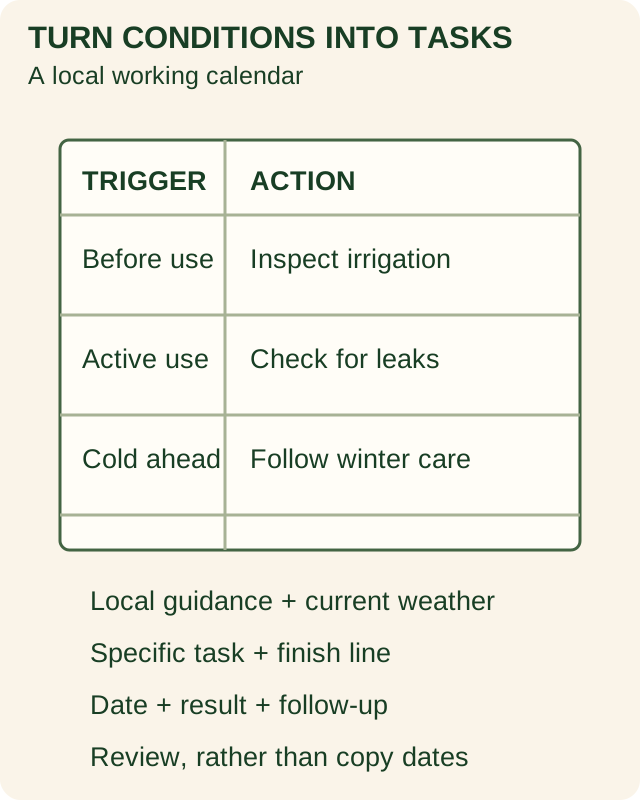
Give each condition-based task a clear cue. Check irrigation before seasonal use is more helpful than a vague spring note if your region's warm weather does not arrive on a predictable date.
For planting tasks, consult local guidance for the particular crop or species. Soil conditions, weather forecasts, and the plant's needs can matter more than a generic calendar label.
Do not turn a regional example into a universal temperature rule. Record the source of the actual threshold you use and make sure it applies to the task and location you have in mind.
A reminder can tell you to evaluate a trigger without telling you the work must happen immediately. That distinction keeps a calendar useful when weather changes your original plan.
Give each task a finish line
Write tasks so you can tell when they are complete. Inspect the hose connections for active leaks is clearer than deal with watering, because it describes an observable action.
Add the relevant manual or information link when a task depends on a specific product. You should not need to search the internet again every time a reminder appears.
For a larger job, divide the planning from the physical work. Measure the new bed, obtain appropriate materials, and build the bed may belong on different days with different requirements.
Estimate effort in a way that helps your household, such as quick check, ordinary session, or arrange outside help. These labels are your planning choices rather than promises about how long every reader should take.
Leave room for a result note. A task that uncovers damaged equipment is not fully resolved by checking the reminder box; it needs a follow-up decision or suitable repair.
Use four working seasons without rigid boundaries
You can organize the page into preparation, active use, transition, and storage. Those broad stages are often easier to adapt than copying a calendar designed around another region's climate.
Preparation might include reading manuals, inspecting stored tools, and checking the layout before regular outdoor use. The exact sequence depends on your equipment and local conditions.
During active use, prioritize small repeated observations that prevent surprises. Check for leaks, debris buildup, loose furniture parts, and plant problems while you are already spending time outside.
At transition, review what needs cleaning, repair, protection, or removal before the next set of conditions arrives. Do not wait for a fixed month if your forecast or product instructions call for earlier action.
Storage is an active stage too. Give stored fabric, tools, and equipment the inspection routine their location and care guidance require rather than assuming they disappear from responsibility until next year.
Build in weather and capacity buffers
Avoid scheduling every demanding job on the same weekend. A plan with no spare capacity becomes difficult to use as soon as rain, travel, or an ordinary household issue interrupts it.
Choose a few high-value tasks for each period and keep optional improvements in a separate list. That lets you maintain the yard even when a larger project needs to wait.
Have an indoor alternative for days when outside work is unsuitable. Reading a manual, ordering the correct replacement part, or updating plant records can still move a real task forward.
Do not work on wet, icy, unstable, or otherwise hazardous surfaces just to satisfy the calendar. Rescheduling is part of using judgment, not evidence that your planning system has failed.
If a task routinely exceeds your available time or ability, change the system. A simpler planting arrangement or an appropriate service visit may be more realistic than repeating an impossible reminder.
Keep a small observation record
After each session, note the date, conditions, action, and anything still unresolved. A few concrete lines can help you remember why a task moved or what part you need next.
Photograph recurring problems from a consistent position when it is safe. You can then compare an actual puddle, worn finish, or plant change rather than relying on a dramatic memory.
Record local events that matter to your yard, such as when you first used irrigation or moved cushions into storage. Over time, those observations help you choose better reminder windows.
Avoid claiming that one year's pattern predicts every future season. Keep the notes as evidence for a flexible plan, with current conditions still making the final decision.
Share the record with anyone who helps care for the property. A short explanation of what was done prevents another person from repeating a treatment or undoing a deliberate change.
Review the calendar while the season is fresh
At the end of each working stage, remove tasks that no longer apply and add the ones you repeatedly discovered too late. Keep the calendar focused on the yard you actually have.
Move a reminder earlier if it arrived after the relevant decision point. Move or simplify a task that consistently competed with other important work.
Check the information links and product instructions when equipment changes. A new model can make an old maintenance note misleading even when the reminder title still sounds correct.
Keep the final version somewhere you will see during normal life, whether that is a shared calendar or a page beside the garden tools. The format matters less than whether you use it.
Your aim is a calmer sequence of decisions across the year. A clear trigger, a specific action, and a brief result note can do more for that goal than a crowded calendar full of dates you cannot justify.
Sources & further reading
Exact documentation checked October 15, 2026. Original examples and illustrations; no hands-on product testing or professional certification claimed.
- A Minnesota guide to garden timing — UMN ExtensionConditions/soil/forecast over fixed national dates; regional example explicitly identified